University Event Crowd Control: Preparing Your Campus for Fall Move-In, Weeks of Welcome, and Football Season

August compresses move-in day, Weeks of Welcome, and the start of fall athletics into a narrow two-to-three week window — and each event creates its own university event crowd control challenge. Getting the right barricades staged in the right zones before Weeks of Welcome kicks off is one of the highest-leverage safety moves a campus can make. This guide walks campus event planners through building a crowd control plan zone by zone, so you’re ready for some of the busiest weeks of the year.
Campus administrators and event planners spend the quiet summer months preparing for the busiest weeks of their year. Crowd control rarely feels urgent in June, but by late August the same roads and quads that sat empty all summer are absorbing hundreds of move-in vehicles, waves of new students navigating the busy campus for the first time, and the first game-day traffic of the season. Having your crowd control plan and event barricades ready before students arrive is what keeps move-in day traffic management from chaos, and keeps your events safe.
During Weeks of Welcome, nearly every part of your campus becomes a crowd control zone, and each one carries its own hazards. The good news is that one flexible inventory of crowd control barricades for universities can cover almost all your barricade needs. This guide breaks down some of the most common crowd control zones your campus will need to plan for. This breakdown will need to be modified for your campus and your event-lineup, but it will help you plan for what kind of event barricades for universities you’ll want to have ready for August.
How to Plan Crowd Control for a High-Traffic Fall on Campus
Planning campus crowd control starts with mapping the zones each event requires and making sure equipment is on-site before the first event begins. You won’t have time to improvise, and a safe environment doesn’t appear by accident. Universities need to build a plan early, working through the hazards and vulnerabilities of each zone as thoroughly as you can.
The Three High-Traffic Zones Every Campus Needs a Plan For
Before selecting equipment, map the three primary zone types that drive university event crowd control in August.
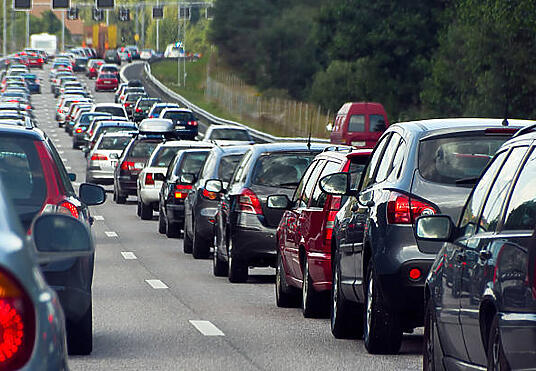
Zone 1: Vehicle approach and roadway control. The goal is to prevent confusion and headache by routing traffic onto and through campus, such as lane splits, temporary road closures, contraflow on peak move-in mornings, and directional management for parking lot entry.
Zone 2: Parking, drop-off, and the vehicle–pedestrian interface. Since parking lots account for roughly one in five vehicle crashes, consider how to help your students, families, and visitors have a positive experience from the moment they drive on campus to the time they drive away. The university parking barricade solutions to consider may include dorm drop-off / loading areas and game-day tailgate / parking areas, especially.
Zone 3: Perimeters, enclosures, and wayfinding. Since confusion and a lack of organization can spoil an event experience, you’ll want to define restricted areas and event footprints for your events with thoughtful crowd control barricades. Nearly every campus event will call for these in some capacity, but a lightweight, aesthetic event crowd control barricade will be able to create the neccesary structure needed to formalize and organize your event.
Move-In Day: Managing Vehicle and Pedestrian Traffic Simultaneously
Move-in day generates high vehicle volumes and hundreds of pedestrians. The core campus move-in day safety challenge is to keep moving vehicles physically separated from the families on foot sharing the same tight spaces. You also want the very first thing an arriving family experiences is an organized, on-brand system rather than a half-baked scatter of cones and a-frames. Here are some things to consider for move-in day crowd control planning:
- Use barricades to organize your unloading process for move-in day. Consider assigning 15-minute check-in windows. Many schools route arrivals into a staging lot and release them to the hall curb only as spots open. You can create a queue using university parking lot barricades instead of letting loaded vehicles crowd around each other. Use a water ballasted, interlocked 42″ Jersey Shape LCD or 32″ Compact LCD to form a clean release lane and holding queue that reads to drivers as a hard edge. Protect that unloading strip from the live travel lane with a barricade buffer, so no one is unloading into moving traffic.
- Help people know where to go at every turn. Temporary closures may break navigation apps and for many this is a brand new environment. This is where teams can deploy custom directional signage mounted onto their barricades for improved wayfinding. It may also be helpful to stage volunteers at the conflict points to ensure everyone is participating in the set-order. Give pedestrians one marked place to cross from curb to entrance, and anchor the check-in table and cart corral so they aren’t sitting in a drive aisle. A short, hand-portable run in school colors handles this and makes the first thing a family sees an organized, on-brand path instead of a scatter of cones and A-frames.
Weeks of Welcome: Crowd Control for Involvement Fairs and Block Parties
Weeks of Welcome brings a run of big outdoor gatherings, and two of them put the largest crowds on your quads and lawns. As you prepare for your university fairs, welcome festivals, and block parties, you’ll need to set a clear perimeter around the event, direct both foot and vehicle traffic around it, and, of course, keep vehicles out of the crowd. Many of the same portable crowd control barricades for universities you use for move in or game day apply to your Weeks of Welcome events.
- Set the perimeter around the event footprint. A continuous run of Billboard Barricades in school colors can draw a clear line and is a valuable sponsor or branding opportunity. The run that forms your perimeter is also your wayfinding tool. Fence off everything that isn’t for the crowd, such as stage back-of-house, generators, cabling, and any restricted areas should be physically separated from foot traffic.
- Close the roads that touch the crowd, and treat vehicle intrusion as the top hazard. Shut down and channelize vehicle approaches with LCD barricades, using campus parking and roadway barricades to hold the closure line and keep drivers from drifting into the footprint.
- Have a plan for live music events. If a festival includes a headliner concert with a real front-of-stage crush, that pressure line calls for a proper front-of-stage barrier rather than a lightweight panel meant for guiding foot traffic. OTW’s live-event safety checklist is a good checklist for the concert side.
Fall Athletics: Game-Day Crowd Control for the Start of Football Season
A football Saturday is the most concentrated crowd event on the fall calendar — as many as tens of thousands of fans arriving in a tight pre-kickoff window, tailgating across the lots, then funneling through a handful of gates. This is where campus event crowd control barriers do some of their most vital work for universities.
Stadium entrance and queue lines. Right before kickoff, fans compress into a short window. Security lines and ticket scanning add friction at every gate. This is where OTW Billboard Barricades do their best stadium work: building gate queue lines and the parking-to-gate pedestrian corridors, in school colors, with directional or sponsor signage mounted right on the panel.
Tailgating, parking, and the walk to the gates. Barricades define the walking corridors from the lots to the gates, edge those routes, and mark the crossings. These are the same campus parking and roadway barricades and pedestrian runs you already stage for move-in, redeployed for the stadium approach.
Field level and perimeter. At the field level, many universities deploy a barricade line to define the allowed spaces. It tells fans, band, cheer, media, and sideline personnel where they can and can’t go. This holds a clean working buffer around the playing surface, and organizes the people who are credentialed to be near the field.
The OTW Billboard Barricade is OTW’s barricade of choice for stadiums and arenas — the same red-and-white units the University of Utah has run at Rice-Eccles Stadium for years, on and off the field. How other venues put it to work in the Stadiums & Arenas overview and this short demo video, and see portable barricades for universities for more campus examples.
Choosing the Right Equipment for Each Campus Application
Most campuses can cover the full move-in, Weeks of Welcome, and athletics sequence with three or four barricade types. Here’s how they map to campus applications.
OTW LCD Barricades create firm vehicle-to-pedestrian separation and hold directional signage. For closing a campus road or channelizing a contraflow lane, the 42″ Jersey Shape LCD interlocks into continuous, wall-like runs and is crash-tested (NCHRP 350, TL-3) for higher-speed zones — just remember that this rating means it’s crashworthy (safe to be struck), not that it stops vehicles, and that it depends on filling the barricade for ballast. To physically stop or redirect a vehicle, use a positive-protection barrier.
OTW Billboard Barricades handle pedestrian flow and corridor management, walkway edges, outdoor gate lines, and perimeter or restricted zones. The Billboard Barricade is a lightweight HDPE plastic barricade — 33 lbs empty — that a single person can carry and that interlocks into long runs. It can be ordered in school colors, holds custom signage for sponsors or directional use, stacks flat for efficient storage, and water-ballasts for added stability. As an alternative to water, the OTW crowd control weight adds ballast while still letting one person reposition the barricade.
Not sure how many you need? See How Many Crowd Control Barriers Do You Need for an Event? For a full product overview, see OTW crowd control barricades.
Campus Event Crowd Control Checklist:
- [ ] Vehicle/pedestrian separation planned and equipped with LCD barricades or water-filled barriers
- [ ] Pedestrian flow routes defined with crowd control or Billboard Barricades
- [ ] Directional signage mounted on barricades at split points and entry areas
- [ ] Restricted, VIP, and sponsor zones defined with barricades or temporary fencing
- [ ] Field and sideline separation matched to the crowd load you expect
- [ ] Equipment ordered early, and confirm your delivery window with OTW well before move-in
How OTW Safety Supports Campus Event Crowd Control
OTW Safety offers crowd control barricades and barriers for campus events, sporting events, and institutional applications. Products are built for fast deployment, durability under high-traffic conditions, and easy repositioning during multi-phase events — a fit for university athletics, Weeks of Welcome events, move-in operations, and year-round institutional use.
- Crowd Control Barricades
- Billboard Barricade
- 42″ Jersey Shape LCD (TL-3 Traffic Barricade)
- Construction & Traffic Barricades
- Portable Barricades for Universities
- How Many Crowd Control Barriers Do You Need for an Event?
- Types of Safety Barriers
- Custom Crowd Control Signs
Frequently Asked Questions
What equipment controls vehicle traffic and roadways during move-in?
Use LCD barricades to close or channelize campus roads and keep vehicle lanes separated from pedestrian areas. The 32″ Compact LCD forms clean release lanes and holding queues, while the 42″ Jersey Shape LCD interlocks into continuous, wall-like runs for higher-volume closures and contraflow lanes. Mount directional signage on the barricades at split points.
How do you protect pedestrians where families cross between cars and dorms?
Parking and drop-off areas are the highest-risk points, since families cross between double-parked cars and buildings. Use barricades to build temporary loading lanes and hard vehicle–pedestrian separation, give pedestrians one marked place to cross, and anchor check-in tables and cart corrals out of the drive aisle. Add custom directional signs to keep foot traffic on the intended path.
What works for outdoor event gates versus indoor check-in lines?
Outdoor gate lines and pedestrian corridors call for lightweight, interlocking barricades that hold up to weather and reposition quickly — the OTW Billboard Barricade is built for this, in school colors with signage mounted on the panel. Indoor check-in lines are a different application, better suited to stanchions and belt barriers; OTW’s strength is the outdoor, high-traffic, vehicle-and-pedestrian side of campus events.
How can universities turn game-day barricades into sponsorship revenue?
The OTW Billboard Barricade holds custom signage panels that can carry sponsor branding, turning gate queues and pedestrian corridors into sellable ad space. Instead of being purely a cost, the perimeter becomes a branding and revenue opportunity — in school colors or a custom Pantone match.
How many crowd control barricades does a campus event need?
It depends on the linear footage of each zone you need to edge, close, or enclose. Map your three zones first, then measure the runs. OTW’s guide, How Many Crowd Control Barriers Do You Need for an Event?, walks through the calculation so you can order with confidence.
Start of Season, Start of the Plan
August compresses three of the highest-traffic campus event types of the year into a short window. Move-in, Weeks of Welcome, and fall athletics each create distinct crowd control needs — and each needs equipment matched to the specific challenge. Make a thorough crowd control and parking management plan, acquire the proper equipment, and have everything on-site before the first event.
OTW Safety carries the barricades and barriers to cover every zone on campus. When you’re ready to plan your fall setup, get a same-day quote from OTW Safety and order with confidence.