Four Types of Traffic Barriers for Your Roadway Project

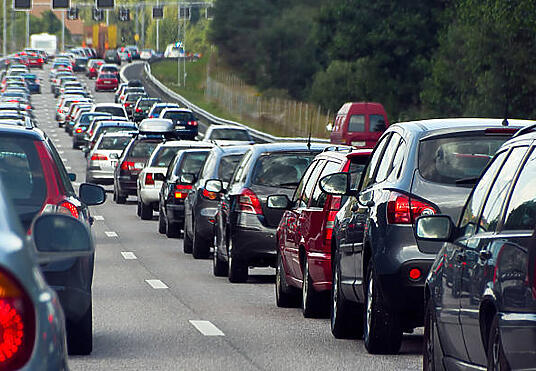
When an organization has a project to complete near an active roadside, traffic control and safety should always be a priority – it’s not just a box to check off! It is essential that companies take measures to ensure the safety of their employees, any pedestrians in the area, and all motorists passing on the road.
This means they will need their on-site safety equipment to be versatile and effective at preventing or limiting the damage caused by accidents, particularly for construction projects that occur on highways or other high-speed areas. With all that in mind, here are four different types of traffic barriers and barricades that construction companies may use on a roadway project:
1. Concrete Barriers
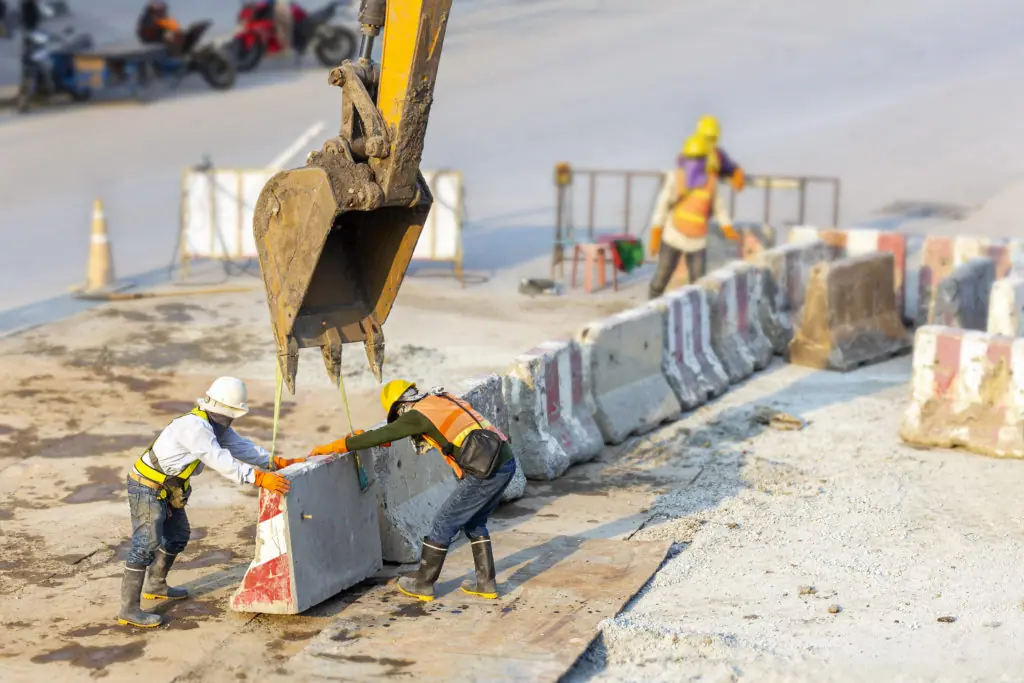
For many years, construction companies relied on concrete barriers for virtually all of their roadside construction operations. While concrete barriers are very durable and sturdy, they do present a number of potential challenges. Concrete barriers are not very portable, so moving and rearranging concrete barriers is difficult in some instances. Concrete barriers also require extensive installation time and effort. Additionally, because most concrete barriers are gray, they may not provide adequate visibility for drivers. However, in many cases, they are still commonly used for permanent or semi-permanent installations for places such as highway meridians, separating new highways construction from active traffic, and more.
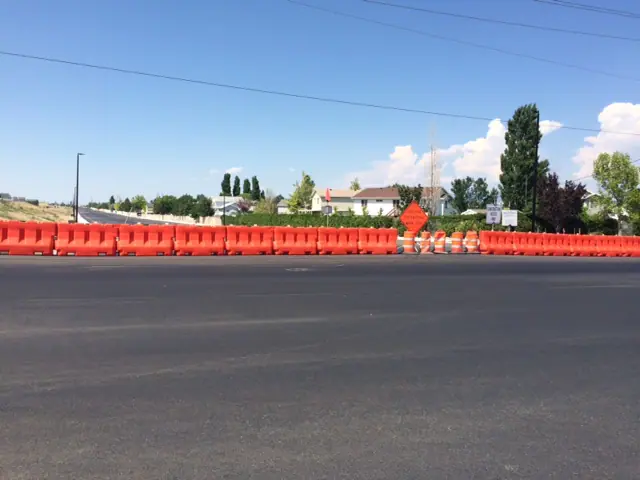
2. Longitudinal Channelizing Devices (LCDs)
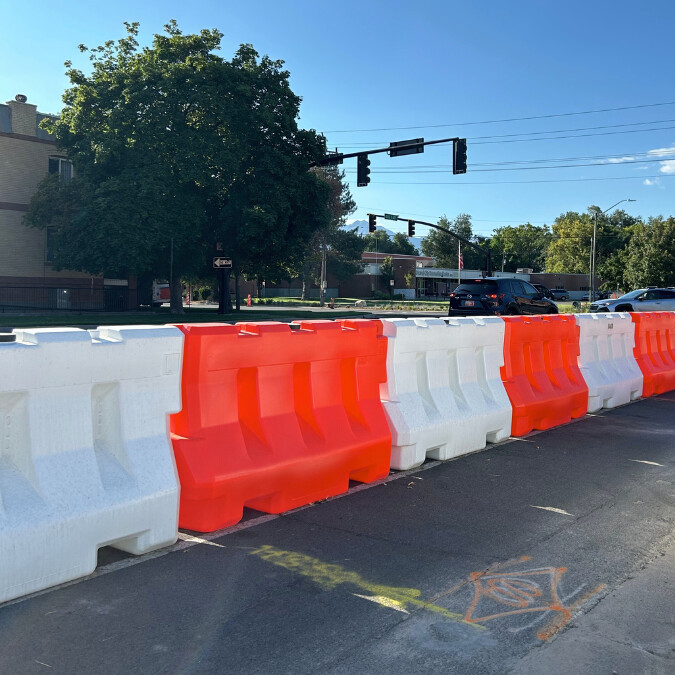
Longitudinal Channelizing Devices (LCDs) were first developed in the early 2000s as an alternative to concrete barriers. LCDs are made from high-density polyethylene (HDPE) plastic and are ballasted with water when deployed along roadsides. In practice, LCDs act to soften the damage of car accidents by absorbing impact and cutting down on the G-forces felt by drivers and passengers in a car. Additionally, LCDs come in a small number of shapes and sizes, they have the ability to form continuous lines by connecting together, and they are usually produced in a bright color –– most notably safety orange.
Many LCDs are approved for roadside use in high-speed areas, like our 42-inch Jersey Shape construction barricade, which is TL-3 tested and approved.
3. Traditional Plastic/Pedestrian Barriers
In addition to barriers designed to direct traffic and prevent car accidents, many construction sites require additional barriers to protect pedestrians. Something like our 32” Multipurpose Jersey Shape Barricade is a good example of a product that is perfect for use in both low-speed traffic areas and for blocking pedestrians from entering a restricted zone. Like its LCD counterparts, these plastic barriers are easy to move, install, break down, and connect to form a continuous wall.
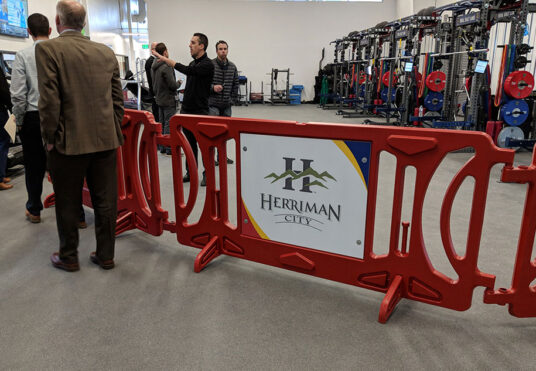
Another pedestrian barricade that has more recently made its mark in the construction world is our original Billboard Barricade. A sleek barricade crafted from HDPE, the Billboard Barricade is lightweight, highly visible, and is perfect for both quick fixes at a work site and as a perimeter or continuous barrier to alert to hazards and prevent passersby from entering a site.
4. Other Barrier Types
Some of the most commonly seen roadside barriers are drums and thin cylindrical delineators. While these often leave room for error when defining lane shifts, etc, because of the space in between them, they are generally used to to designate upcoming construction zones on highways and in city or residential areas. (Of course, plastic LCD barricades are able to perform the same functions much more effectively.) Drums are manufactured a dime a dozen, which makes them highly affordable in many cases, but there are pros and cons to a cheaper barrier. Drums and delineators are also generally frangible, which means they compress when hit… but often cause damage to the offending vehicle as well, and, as mentioned above, it is easy for motorists to become confused when navigating barrels in an active construction zone. Still, they remain one of the most used barriers to this day because of their portability and price.
Lastly, some construction sites may benefit from additional barrier fence panels that can be attached to barricades or LCDs. These fence panels provide an extra layer of security and protection, and may also be customized to feature company logos for the purpose of advertising.
Our safety pros are waiting to help with your next project
Finding the right barriers for your next roadside project is essential. Whether you’re building a new highway or a pedestrian walkway, choosing the right barrier matters. Not only do roadside barriers provide vital safety measures, but investing in plastic barricades could help your company save time and money as well.
At OTW Safety, we specialize in plastic barricades, and we’ll work with you to find the ideal solution to suit your needs. No matter where you’re located – Nebraska to Oregon or Maine to Florida – we can help. We manufacture and sell our products directly, so contact us here for more information!